RV Towing Capacity Guide At Riverside Camping Center In NC

The towing tool is easy to use. Simply input your vehicle's make, model, and year. Our system will then compare the towing capacity of your vehicle to the RVs available in our inventory. The results will show you the RVs you can choose from that your vehicle can safely tow.
With our towing tool, you can quickly and easily find an RV that your vehicle can tow. Our selection of RVs includes a variety of types and sizes, so you can find the perfect one for your needs. Plus, our knowledgeable sales team is here to help answer any questions you have and make sure you get the perfect RV for your next adventure.
RV Towing Capacity at a Glance
- RV towing can range from 3,000 to 15,000 pounds for low-end Class C to high-end diesel Class A models.1
- When towing, it's important to check your weight after loading all items onto your trailer, ensure no more than 10% to 15% of the weight is on the tongue, and drive cautiously – especially as you approach the max towing capacity.
- Class C RV towing capacity ranges from 3,000 to 8,000 pounds, similar to small-sized trucks.1
- Fifth-wheel towing requirements are intensive, requiring a capable truck (usually heavy-duty) and additional safety precautions to tow properly.
- Finding the right trailer towing capacity calculator can ease your mind while you prepare for an unforgettable trip.
RV Tow Ratings by Vehicle, Explored
Mastering RV towing can be one of the best ways to get the most out of your vacation. Whether you're behind the wheel of a Class A motorhome or towing a truck camper to your local campsite, understanding when and how to get these homes on the move is critical to your confidence and enjoyment of your trailer, camper, or RV. But what can you expect from your trailer towing capacity? And how does fifth-wheel RV towing differ from lightweight RV towing?
At Riverside Camping Center, we're familiar with all shapes and sizes of RV models. So, how do you determine the towing capacity of an RV? Let's see what you can expect when you choose an RV for your weekend excursion.
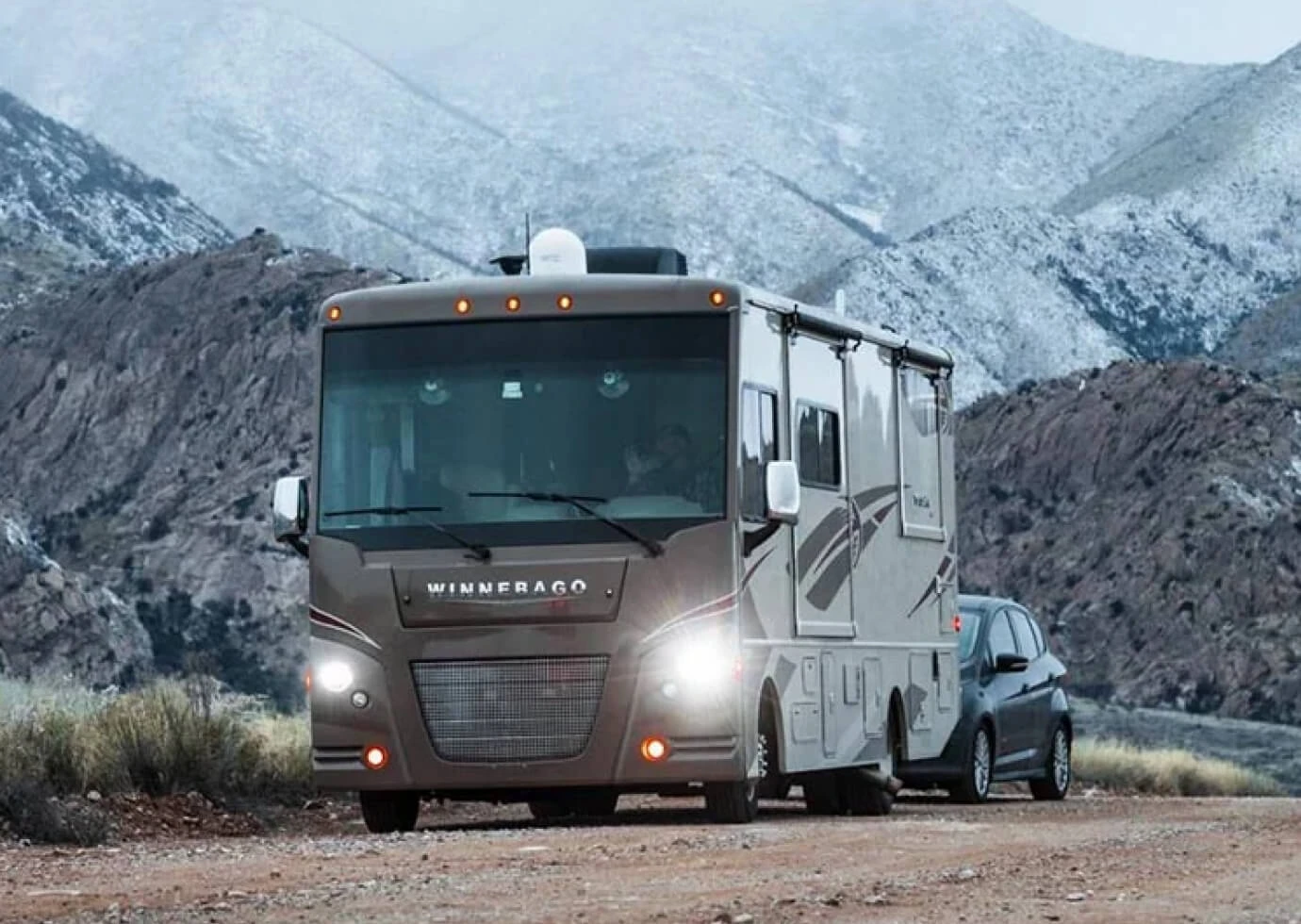
RV Towing Capacity Basics
When selecting your travel companion, there are two major categories to choose from. The first category is motorized, drivable RVs.
- Class A: Like with the new Forest River Salem for sale, Class A models are massive, bus-like vehicles, perfect for larger groups. They can tow upwards of 15,000 pounds when properly equipped with a diesel engine and the right towing package.1
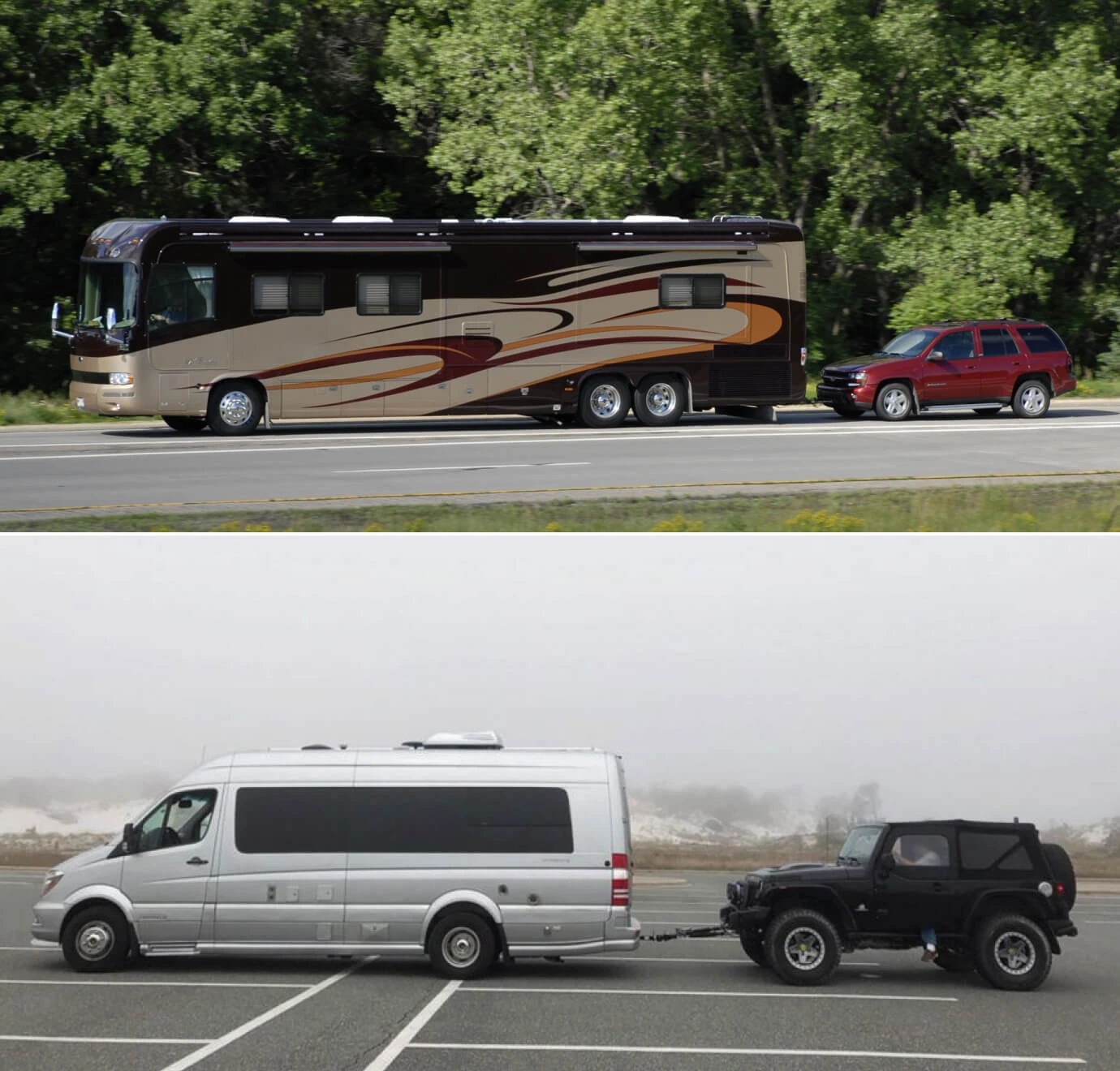
- Class B: These are the smallest type of motorized RV. Built like a van, Class B RVs are easy to drive but are often not designed for towing. While some can tow up to 5,000 pounds, read your owner's manual before doing so, as most are designed for 3,500 pounds at most.1
- Class C: A middle ground between the two motorhome extremes. A Class C RV is built closer to a truck than the Class A's bus-like appearance. As a result, some can tow closer to 8,000 pounds when properly equipped.1
Most other types of RVs are not motorized. Therefore, they require a truck or SUV to tow them. They fall under three categories, listed below.
| Truck Camper | Travel Trailer | Fifth-Wheel | |
|---|---|---|---|
| Examples |
|
|
|
| Average Weight (Dry) | Light (700 - 5,000 lbs) | Moderate (1,200 - 9,000 lbs) | Very large (7,000 - 25,000 lbs) |
| Average Sleeping Capacity (People) | 2 to 5 | 2 to 8 | 4 to 8 |
| Length (Est.) | 6.5 - 20 ft | 13 - 40 ft | 25 - 40 ft |
| Towability | Sits in truck bed | Requires hitch, otherwise tends to be simple | Requires fifth-wheel/gooseneck hitch |
| Average Cost | Lowest | Medium | High |
| Stowage | Limited | Average to excellent | Excellent |
| Best For | Easy drives, quick camping trips, big trucks | Larger families, longer trips, less drivable roads | Consistent, comfortable travel on drivable roads |
Class C RV Towing Capacity
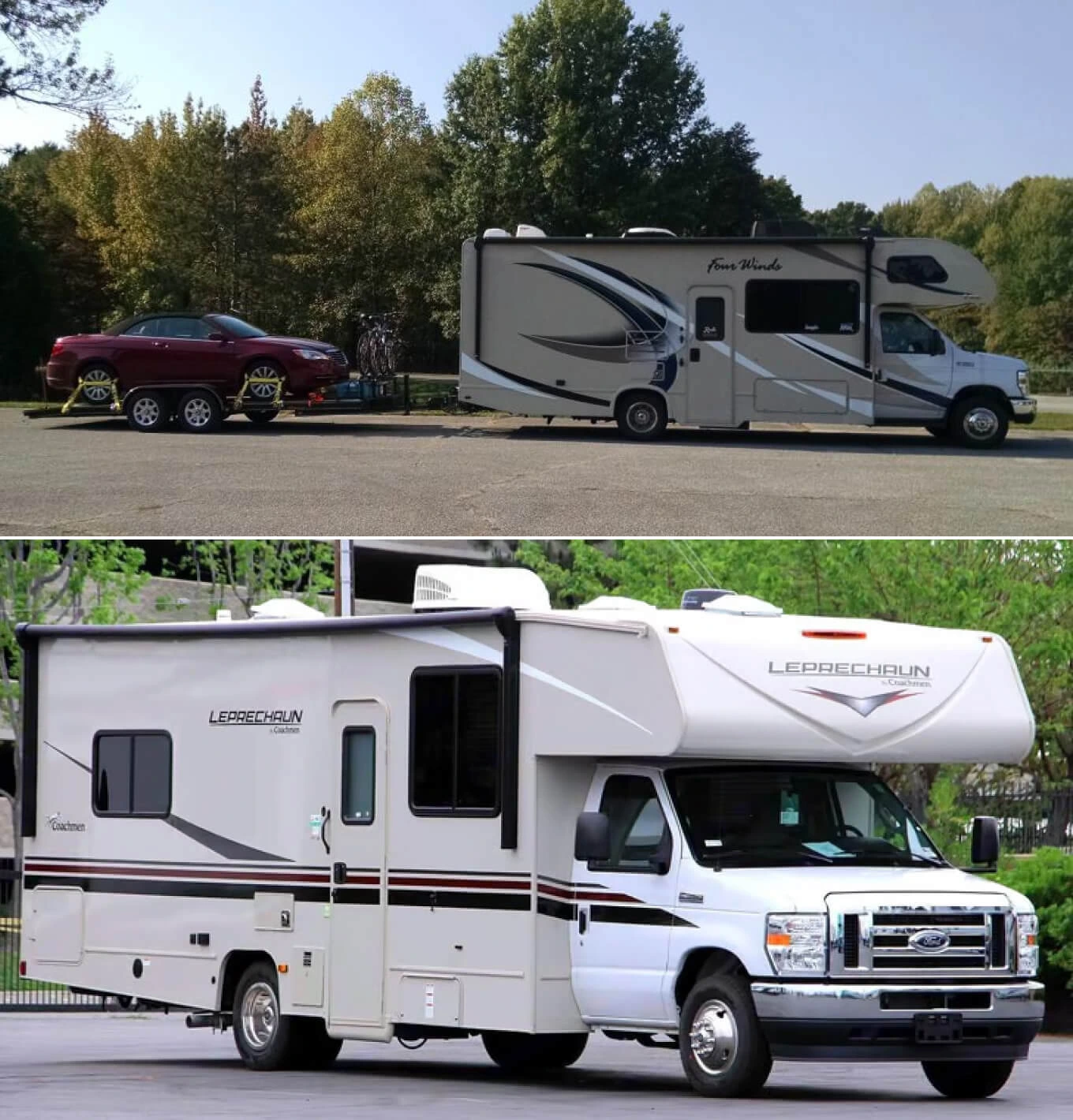
Let's zero in on a very popular type of RV: Class C. As discussed earlier, this motorized category falls between A and B in length and is identified by an over-the-cab sleeping area. These models can have a wide range of towing capacities, depending on their build and chassis. Let's provide some examples:
- Thor Motor Coach Chateau: This massive motorhome is a robust workhorse. As a Class C RV with 8,000-pound towing capacity options, you can pack up and still have enough room for small vehicles that can't fit inside.1
- Coachmen Leprechaun Ford 350: While this model has a comfortable chassis, its towing hitch is rated for 5,000 pounds.1
- Fleetwood Insight: This rather lavish motorhome can tow up to 4,200 pounds with its default configuration.1
This range is part of the reason why it's so crucial to check your owner's manual for information before you hitch up: Your motorhome and someone else's can have very distinct capabilities, despite similarities in size. For a Class C RV with 10,000-pound towing capacity options, you'll need a "Super C" model, such as the Renegade Veracruz and its 12,000-pound capacity.
Fifth-Wheel Towing Guide
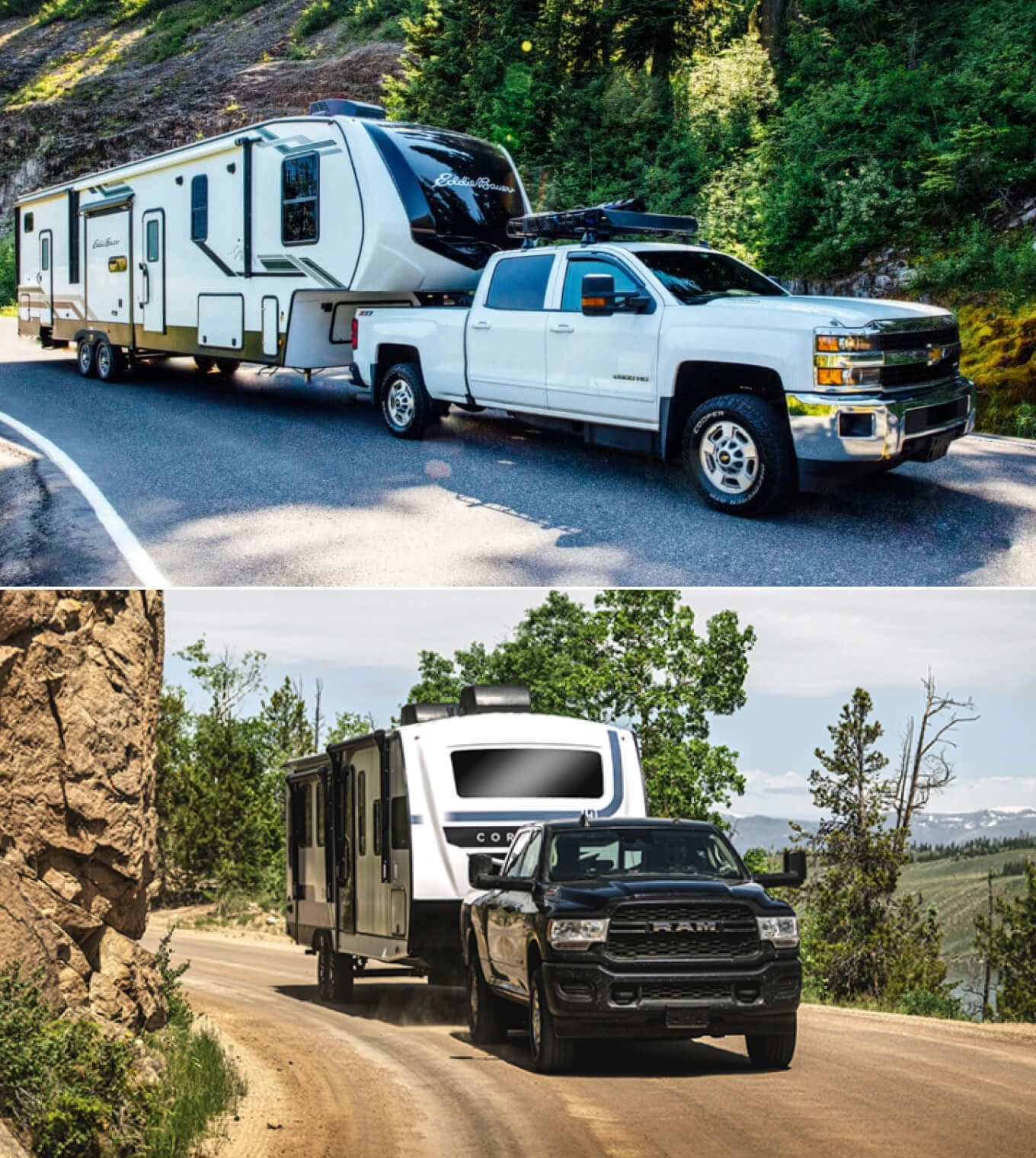
Say you're considering a new East to West Ahara. That's a fifth-wheel camper, which requires heavy-duty truck towing capability and a long bed to handle it properly.
Once you have the right equipment, ensure you and your vehicle are fully prepared for hitching. Here are a few towing safety tips when using a fifth-wheel hitch:
- Check tires on the truck and trailer before starting.
- Tighten fifth-wheel hitch bolts.
- Connect the battery.
- Check that doors are locked properly.
- With a spotter, check that the truck height is correct and the hitch is lined up.
- With a spotter, slowly back into the trailer, lining up the hitch and kingpin.
- Connect wires for lights and brakes. Connect the breakaway cable.
- Check that the lights work. Do a short, controlled drive to ensure trailer brakes are functioning properly.
- Ensure your steps, doors, tailgates, landing gear, or stabilizers are all up before takeoff.
It's a good idea to have a personalized checklist in hand before towing any RV – even a small one like a truck camper.
Tow Vehicle Guide (by Vehicle)
Now, let's say you're working with a smaller travel trailer or another non-motorized camper, and you're thinking about pop-up camper towing. What kind of truck or SUV will you need to get it to its destination? Here are a few examples of standard trucks you can trust to showcase Class 3 trailer hitch towing capacity while offering large enough beds for fifth-wheel camper towing.
| Max Tow Rating | Max Bed Payload Rating (If Applicable) | Recommended For | |
|---|---|---|---|
| Ford Expedition | 9,600 lbs2 | No Bed | Travel trailers, family vacations |
| Ford F-150 | 13,500 lbs2 | 2,440 lbs3 | Most truck campers, any travel trailer, very small fifth-wheel trailers |
| Ford F-250 | 23,000 lbs2 | 4,246 lbs3 | All truck campers, any travel trailer, most fifth-wheel trailers |
| Chevy Silverado 1500 | 13,300 lbs4 | 2,260 lbs5 | Most truck campers, any travel trailer, very small fifth-wheel trailers |
| Chevy Silverado 2500 | 22,420 lbs4 | 4,200 lbs5 | All truck campers, any travel trailer, most fifth-wheel trailers |
| Ram 2500 | 20,000 lbs2 | 3,930 lbs6 | All truck campers, any travel trailer, some heavier fifth-wheel trailers |
| Toyota Tacoma | 6,500 lbs7 | 1,705 lbs8 | Some truck campers, some travel trailers |
| Toyota Tundra | 12,000 lbs7 | 1,850 lbs8 | Some truck campers, most travel trailers, very small fifth-wheel trailers |
| GMC Sierra 1500 | 13,300 lbs9 | 2,410 lbs10 | Most truck campers, any travel trailer, very small fifth-wheel trailers |
Trailer Towing Capacity Calculator
As you can see, travel trailer weight ranges make RV towing a uniquely family-friendly business, with some full-size SUVs able to take on the challenge, depending on what your goals for the weekend look like. However, before you handle any of these, exercise caution: A trailer towing capacity calculator, or a scale like the one at Riverside Camping Center, should be used to keep your truck or RV from being damaged by unexpected weight. A tongue weight calculator, for example, should be referenced before you hitch up.
At our RV-centric location, you can shop for new RV vehicles, weigh a travel companion before you begin your next adventure, have GCWR vs. GVWR explained, and so much more.

Frequently Asked Questions
What RV can I tow with my SUV or truck?
Depending on the size of your SUV or truck, you can tow travel trailers, fifth-wheel trailers, and truck campers with ease. The compact travel trailer is the only RV towable by SUVs. Fifth-wheel options are larger and will require a truck. Truck campers sit in the bed of larger trucks but don't require towing. Class A, B, and C RVs are all motorized and drive themselves.
How much can a Class C RV tow?
Generally, a Class C RV can tow anywhere between 3,000 and 8,000 pounds.1 This large range is dependent on the size, chassis, and capability of your RV, with some models (such as a Thor Motor Coach Chateau) being able to haul the full 8,000 pounds.1 Before towing with your motorhome, please check your owner's manual for more information on your towing limit and properly hitching.
Can towing an RV affect my fuel economy?
Yes, much like with towing anything, towing an RV will lower your fuel economy. Your engine requires more power to reach highway or city speeds properly and to accelerate from a stop while towing a heavier trailer, such as an RV. While it isn't a precise science, you can expect a 1% to 2% drop in fuel economy for every 100 pounds towed, with some trailers reducing MPG by 50%.
Is it safe to tow an RV in the mountains?
RV towing in mountains is a safe and common practice, but you must exercise extreme caution when doing so. Some RVs, like truck campers, are designed with easy mobility in mind, and should be trivial to navigate even skinny mountain roads. Travel trailers can also handle some mountainous conditions, but fifth-wheel models will require precise handling and, preferably, more demarcated roads.
1When properly equipped.
2When properly equipped. See dealer for details.
3Maximum payload capabilities are for properly equipped vehicles with required equipment and vary based on vehicle configuration, accessories, and option content. Horsepower, torque, payload and towing are independent attributes and may not be achieved simultaneously.
4Before you buy a vehicle or use it for trailering, carefully review the Trailering section of the Owner's Manual. The weight of passengers, cargo and options or accessories may reduce the amount you can tow.
5For comparison purposes only. See the Owner's Manual and the label on the vehicle door jamb for the carrying capacity of a specific vehicle.
6When properly equipped. Max payload ratings shown for base configuration. Additional options, equipment, passengers, and cargo weight may affect payload weights. Contact dealer for details.
7Before towing, confirm your vehicle and trailer are compatible, hooked up and loaded properly and that you have any necessary additional equipment. Do not exceed any Weight Ratings and follow all instructions in your Owner's Manual. The maximum you can tow depends on base curb weight plus the total weight of any cargo, occupants, and added vehicle equipment. "Added vehicle equipment" includes additional standard/optional equipment and accessories added by the manufacturer, dealers, and/or vehicle owners. The only way to be certain of your vehicle's exact curb weight is to weigh your vehicle without passengers or cargo. (Calculated with the new SAE J2807 method.) Installation of a tow hitch receiver or other accessories located near the rear bumper or side-door kick sensors may require disabling or removing the kick sensor, and the sensor operation setting in your vehicle should be turned off. See Owner's Manual for limitations.
8Max payload varies based on accessories and vehicle configuration.
9GM-estimated. Maximum trailering ratings are intended for comparison purposes only. Before you buy a vehicle or use it for trailering, carefully review the trailering section of the Owner's Manual. The trailering capacity of your specific vehicle may vary. The weight of passengers, cargo and options or accessories may reduce the amount you can trailer.
10These maximum payload ratings are intended for comparison purposes only. Before you buy a vehicle or use it to haul people or cargo, carefully review the vehicle loading section of the Owner's Manual and check the carrying capacity of your specific vehicle on the label on the inside of the driver's door jamb.